
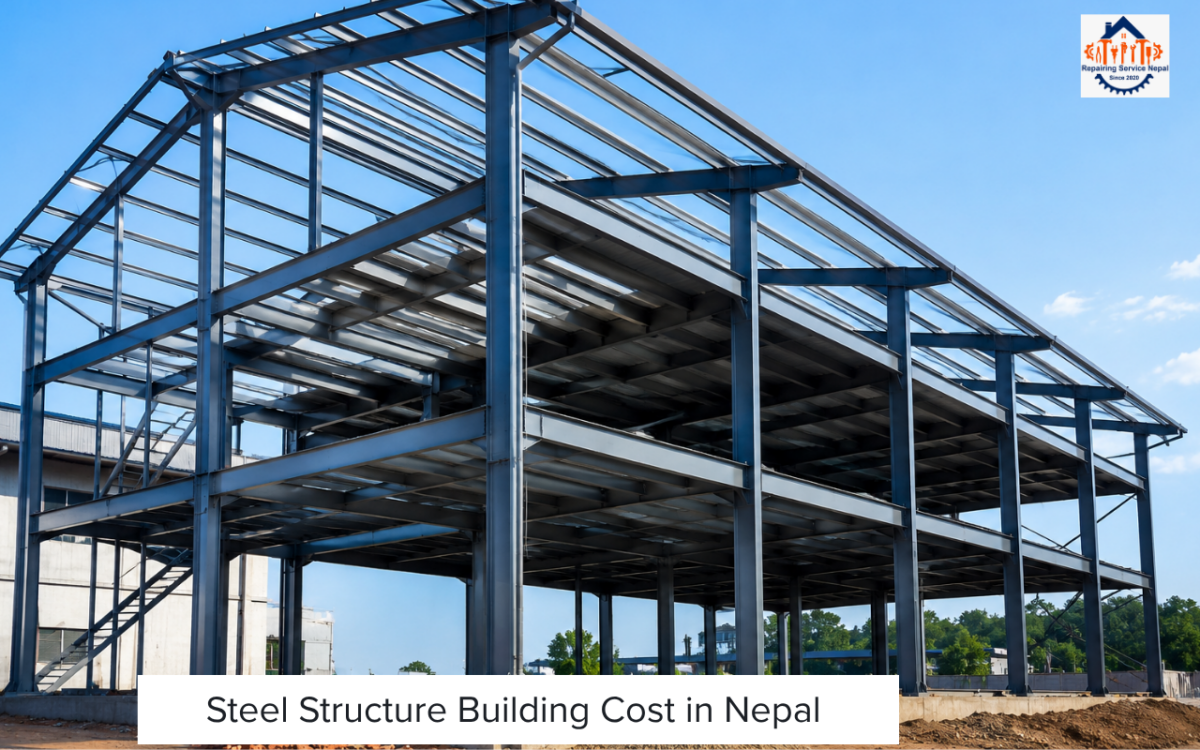
If you are planning to build a home or a commercial space in Nepal, one of the first questions you will ask is: how much will it cost? And if you are considering steel, that question becomes even more specific. Steel construction prices in Nepal have changed significantly in 2026, and many homeowners, investors, and builders are confused by the different quotes, materials, and advice they receive from every contractor they meet.
This guide will break it all down for you. This guide explains steel construction costs, material pricing, labor expenses, and important planning factors for projects in Nepal. Whether you are a first-time builder in Kathmandu or an investor planning a commercial project outside the valley, this article will help you understand the steel structure building cost in Nepal from every angle.
At Repairing Service Nepal, we work with homeowners and builders every day. We know the questions you have and the answers you need before you spend a single rupee.
Good home construction starts with proper planning and a realistic budget. In Nepal, many families buy land in aana or dhur and want a complete home that is safe, strong, and affordable. Working with professionals early can help reduce costs and avoid material waste during construction.
What is a steel structure building?
A steel structure building is a type of construction where the main load-bearing framework is made from structural steel components such as H-beams, I-beams, steel columns, and hollow sections. Instead of relying mainly on brick walls or reinforced concrete (RCC) for structural support, steel buildings use a steel frame to carry the weight of the roof, floors, and walls. These buildings are commonly used for houses, warehouses, factories, commercial buildings, showrooms, and office spaces because steel provides high strength, flexibility, and faster construction speed.
Steel structure buildings are becoming increasingly popular in Nepal due to their earthquake resistance, durability, and reduced construction time. Since steel is lighter and more flexible than traditional concrete structures, it can better absorb seismic movement during earthquakes. Steel buildings also allow larger open spaces, easier future modifications, and lower long-term maintenance when properly treated against rust and corrosion. Depending on the design and finishing quality, steel structures can be used for both affordable residential homes and large-scale commercial projects.
Average Steel Construction Cost in Nepal (2026)
Steel construction pricing depends on the building type, material quality, labor charges, and finishing level. Residential homes usually cost more than warehouses because they need better interior work and insulation. The steel structure building cost in Nepal in 2026 generally falls between NPR 2,500 and NPR 5,000 per square foot, depending on the type of structure, quality of materials, location, and finishing level. This is a wide range, but it is a realistic one. A basic steel frame warehouse will sit at the lower end. A fully finished residential steel home will sit higher.
Here is a simple overview to start:
-
Basic steel frame structure: NPR 1,400 – 2,500 per sq ft
-
Standard residential steel structure house: NPR 2,500 – 3,800 per sq ft
-
Premium residential or commercial steel building: NPR 4,000 – 5,000+ per sq ft
These figures are for the structure itself. They do not include land cost, Naksha Pass permit fees, interior furniture, or boundary walls. Always keep that in mind when budgeting.
Steel Construction Cost Per Sq Ft
The per sq ft construction cost in Nepal 2026 for steel structures is not a fixed number. It depends on three main factors: the finish level you choose, the design complexity, and where you are building.
Basic, Standard, and Premium Finish Cost
-
Basic finish (NPR 1,400 – 2,500/sq ft): This covers a pre-engineered or light-gauge steel frame, basic roofing like corrugated sheets, and no interior finishing. Typically used for warehouses, storage sheds, or farm buildings.
-
Standard finish (NPR 2,500 – 3,800/sq ft): This is the most common range for residential steel construction in Nepal. It includes a proper steel frame, RCC foundation, brick or panel infill walls, basic tiles, plumbing, and electrical work.
-
Premium finish (NPR 4,000 – 5,000+/sq ft): This includes high-end cladding, imported sanitaryware, glass facades, modular kitchens, and architect-designed interiors.
Kathmandu vs Outside Valley Pricing
The house construction cost in Kathmandu is consistently 15 to 20 percent higher than in cities outside the valley. This is because labor is more expensive, material delivery is harder in congested areas, and permit fees are steeper in Kathmandu Metropolitan and Lalitpur.
Transportation and Labor Cost Differences:
-
A skilled mason or steel fabricator in Kathmandu charges NPR 1,500 – 2,000 per day.
-
The same work in Pokhara, Butwal, or Dharan costs roughly NPR 1,200 – 1,500 per day.
-
If your site is far from a main road in a hilly region, transportation can add 15 to 30 percent to your material costs alone.
Outside the valley, you can save a meaningful amount. Transportation and labor charges can change significantly from one location to another. But if your site is remote, those savings may be smaller than they look on paper once you factor in transport.
Residential vs Commercial Steel Structure Cost
Residential steel projects usually cost more than a simple industrial steel building because residential projects need more finishing, better insulation, stronger floor loads, and compliance with living standards.
| Feature | Residential Steel Structure House | Commercial Steel Structure Building |
|---|---|---|
| Average Cost | NPR 2,500 – 5,000 per sq ft | NPR 1,400 – 5,000 per sq ft |
| Main Purpose | Family living and comfort | Business, warehouse, factory, or office use |
| Finishing Level | High-quality interior finishing | Basic to premium commercial finishing |
| Insulation Requirement | More insulation for comfort | Basic insulation for industrial use |
| Structural Load | Stronger floor load for residential use | Open-span structure for machinery or storage |
| Interior Work | Bedrooms, kitchen, bathrooms, tiles, paint | Mostly open halls or office partitions |
| Construction Speed | Moderate construction speed | Faster with prefabricated steel parts |
| Design Complexity | More detailed architectural design | Simpler structural layout |
| Best Example | Multi-storey steel homes | Warehouse, factory, showroom, office |
| Construction Time | Around 8–12 months | Around 30–60 days for warehouses |
For a commercial warehouse in Kathmandu, a medium-sized building can be completed in 30 to 60 days using prefabricated steel parts, which is far faster than any RCC alternative.
Many homeowners now compare steel and RCC construction before starting a project. Steel buildings are becoming popular because they are faster to build and easier to maintain.
Steel Structure vs RCC Construction Cost in Nepal
Both steel and RCC construction methods are widely used in Nepal. Because of Nepal’s seismic risk and frequent seismic activity, many engineers now recommend earthquake-resistant construction with better strength and structural safety for homes and commercial buildings.
This is the most common comparison people make when planning a build. Which is cheaper? Which lasts longer? Which is safer during an earthquake? Let us go through each point honestly.
Initial Construction Cost Comparison
At first glance, RCC (Reinforced Cement Concrete) construction often appears cheaper per square foot. A basic RCC build in Nepal runs NPR 3,000 – 4,500 per sq ft for a standard house. A steel-framed home in the same category runs NPR 2,500 – 4,000 per sq ft, depending on design. The gap is smaller than most people think, and it can flip depending on the steel market rate at the time of construction.
For industrial or warehouse use, steel is clearly cheaper upfront. For residential buildings with full finishes, the difference is not dramatic.
Long-Term Maintenance Cost
This is one area where steel construction offers long-term advantages. A well-built steel building requires significantly less maintenance over 20 to 30 years compared to an RCC house. Concrete tends to crack, develop dampness, and require frequent plastering repairs. Galvanized steel, when properly treated and painted, resists corrosion and needs far fewer repairs over its lifetime.
-
RCC house: Expect repair costs every 5 to 8 years for plastering, waterproofing, and surface cracks.
-
Steel structure: With proper anti-rust treatment, maintenance needs are minimal for 10 to 15 years at a stretch.
Over a 30-year lifespan, the total cost of ownership for a steel building can actually be lower than an RCC equivalent.
Earthquake Resistance and Structural Safety
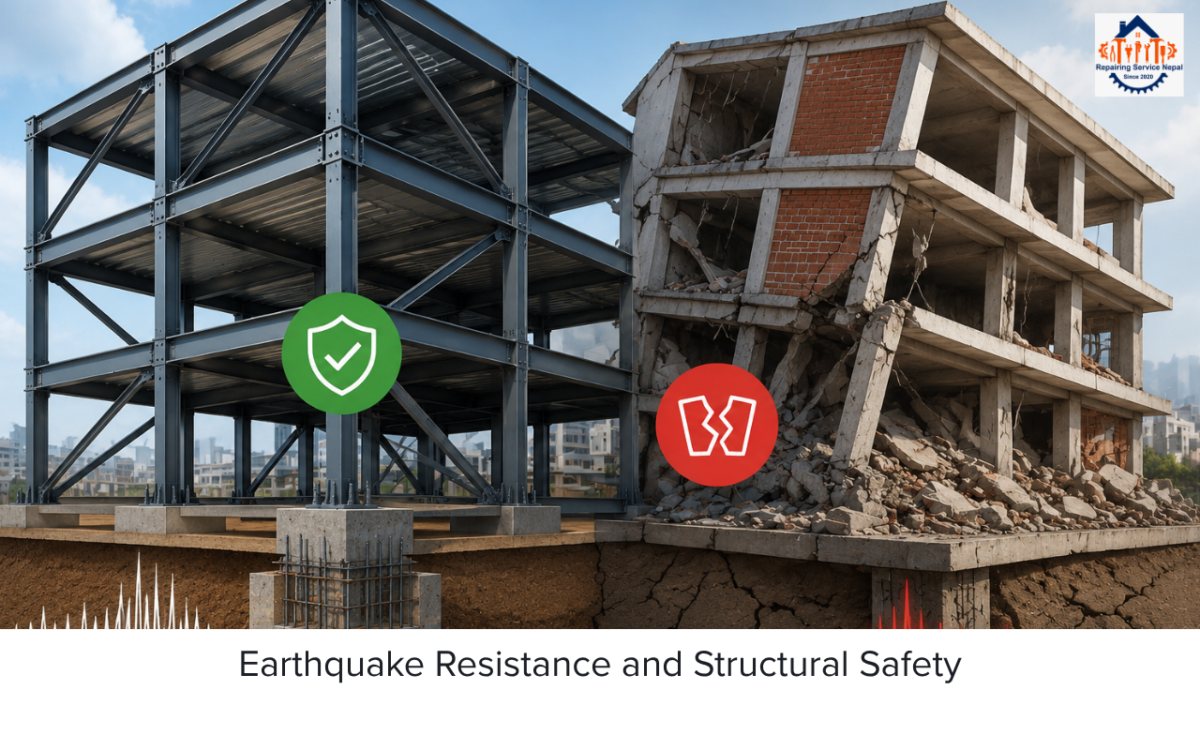
Nepal sits in one of the world’s most active seismic zones. This is not a theoretical risk. The 2015 earthquake showed exactly how devastating poorly built structures can be. Steel has a major advantage here.
Steel bends under stress instead of snapping. This ductility means a steel frame absorbs seismic energy rather than collapsing under it. RCC, when built correctly with Fe 500D TMT bars and proper Nepal Building Code compliance, is also seismically resistant. But steel adds an extra layer of flexibility that concrete cannot match.
An earthquake-resistant house built with a steel frame and a proper RCC foundation is among the safest structural combinations available in Nepal today.
Construction Speed and Durability
Steel structure buildings are faster to build. Most steel components are prefabricated in a factory and then assembled on-site. This can cut your construction timeline by several weeks or even months compared to a traditional RCC build.
-
A standard RCC 2.5-storey house takes 12 to 18 months to complete.
-
A steel structure house of the same size can often be completed in 8 to 12 months, sometimes less if the design is straightforward.
With proper protective coatings, a steel structure building in Nepal can last 50 years or more. This can provide strong long-term value for homeowners and developers.
What Affects Steel Construction Pricing?
The house construction cost in Nepal also depends on material selection, labor availability, and the quality of RCC work. Choosing local alternatives for some materials can help save lakhs on a project without reducing structural integrity or safety.
Current Steel Market Price in Nepal
Steel is the biggest cost factor in most steel construction projects. Structural steel in Nepal includes H-beams, I-beams, MS (Mild Steel) sections, and GI (Galvanized Iron) sheets. The price of structural steel in Nepal in 2026 depends on global steel market trends and import duties.
-
TMT rebar (for RCC foundation): NPR 90 – 120 per kg
-
Structural steel sections (H-beam, I-beam, MS hollow sections): Generally NPR 100 – 160 per kg, depending on the profile and supplier
These prices are ex-factory or ex-supplier and do not include 13% VAT or transportation to your site. By the time structural steel reaches your Kathmandu site, the effective rate can be 15 to 20 percent higher than the quoted factory rate.
Imported vs Local Steel
Nepal imports the majority of its structural steel. Locally rolled TMT bars are available from brands like Panchakanya, Jagdamba, and Himal, but for heavy structural sections like H-beams and I-beams, most fabricators source from Indian or Chinese suppliers. Imported sections are generally reliable, but prices fluctuate with currency rates and import duty changes.
Always ask your fabricator whether the price they quote is inclusive of VAT and transport. The difference can be NPR 10 to 20 per kg, which adds up significantly over a large structure.
Labor and Fabrication Charges
Steel fabrication is a skilled job. A structural fabricator who can correctly weld, cut, and assemble steel frames is not cheap, and rightfully so. Poor fabrication work on a steel structure building is more dangerous than many people realize.
-
Skilled steel fabricator: NPR 1,200 – 2,000 per day, depending on location
-
Fabrication cost as a percentage of total steel structure cost: Roughly 25 to 35 percent of the structural budget
Do not hire the cheapest available welders for structural work. Weld quality directly affects how your building performs during an earthquake.
Foundation Type and Structural Design
Even the lightest steel structure needs a proper RCC foundation. You cannot skip this. The foundation type depends on your soil conditions, which is why a soil test (NPR 15,000 – 40,000) is always worth the cost before you start.
-
A shallow strip or raft foundation works on stable, hard soil.
-
A pile foundation may be needed on soft or filled land, adding significantly to your budget.
A complex structural design with cantilevers, irregular shapes, or multi-directional spans also increases fabrication cost and engineering fees. Simpler rectangular designs are always the most cost-effective.
Roofing, Cladding, and Interior Finishing
For residential steel homes in Nepal, the roof and wall cladding choices have a big impact on the final construction budget.
-
Basic corrugated GI sheets: Cheapest but limited insulation
-
Insulated sandwich panels: Mid-range cost, excellent temperature control for hilly climates like Mustang or Dolpa
-
Brick infill walls on steel frame: Most common for residential use, gives a more traditional look
Interior finishing costs for a steel structure house follow the same pattern as any RCC house: tiles, paint, plumbing, and electrical work add NPR 1,000 – 2,500 per sq ft over and above the structural cost.
Cost Breakdown for a 2.5-Story Steel House in Kathmandu
The 2.5-storey house is Nepal’s most popular residential form. Here is a realistic construction cost breakdown for a standard 1,500 sq ft mid-range build in Kathmandu.
Material and Structural Cost
-
Structural steel (H-beams, I-beams, hollow sections): NPR 15 – 22 lakh
-
RCC foundation (concrete, TMT rebar): NPR 8 – 12 lakh
-
Brick infill walls: NPR 4 – 5 lakh
-
Roofing and cladding materials: NPR 3 – 6 lakh
-
Total estimated material cost: NPR 30 – 45 lakh
Labor and Fabrication Cost
-
Steel fabrication and erection: NPR 6 – 10 lakh
-
Foundation and masonry labor: NPR 4 – 6 lakh
-
Finishing labor (tiles, paint, plumbing, electrical): NPR 5 – 8 lakh
-
Total estimated labor cost: NPR 15 – 24 lakh
Engineering and Design Fees
-
Structural engineer fees: NPR 50,000 – 1,50,000
-
Architectural drawings: NPR 50,000 – 2,00,000
-
These fees are 2 to 5 percent of the total construction cost for most residential projects.
Municipality Permit and Approval Charges
-
Naksha Pass (building permit): NPR 10 – 80 per sq ft; can exceed NPR 80,000 in Kathmandu Metro for larger builds
-
Soil testing: NPR 15,000 – 40,000
-
Water and electricity connection charges: Billed separately by utilities
Total estimated budget for a 1,500 sq ft mid-range steel structure house in Kathmandu: NPR 65 lakh to NPR 1 Crore, depending on finish quality and design complexity. Premium finishes can push this well above NPR 1 Crore.
Structural Steel Prices in Nepal (2026)
Changes in steel prices directly affect overall construction expenses. Material price increases during peak construction season can raise the final project budget significantly. Understanding steel rates per kg in Nepal is important before you sign any contract or accept any material quote.
Steel Price Per Kilogram
As of 2026:
-
TMT rebar Fe 500D (Panchakanya, Jagdamba, Himal): NPR 90 – 120 per kg (ex-factory, excl. VAT)
-
MS structural sections (imported H-beam, I-beam): NPR 100 – 160 per kg
-
GI sheets for roofing: NPR 85 – 130 per kg, depending on thickness
All ex-factory prices exclude Nepal’s 13% VAT and transportation. Retail site-delivered prices are typically 15 to 20 percent higher.
2026 Steel Price Trends
Steel prices in Nepal have risen approximately 7 to 10 percent year-on-year since 2024, driven by rising import costs, global steel demand, and fuel price increases that affect transportation. If you are planning a build later in the year, consider buying your key structural steel early to lock in current rates. Prices often spike after Dashain-Tihar and during peak construction season from October to March.
Are Steel Houses Safe in Nepal’s Earthquake Zones?
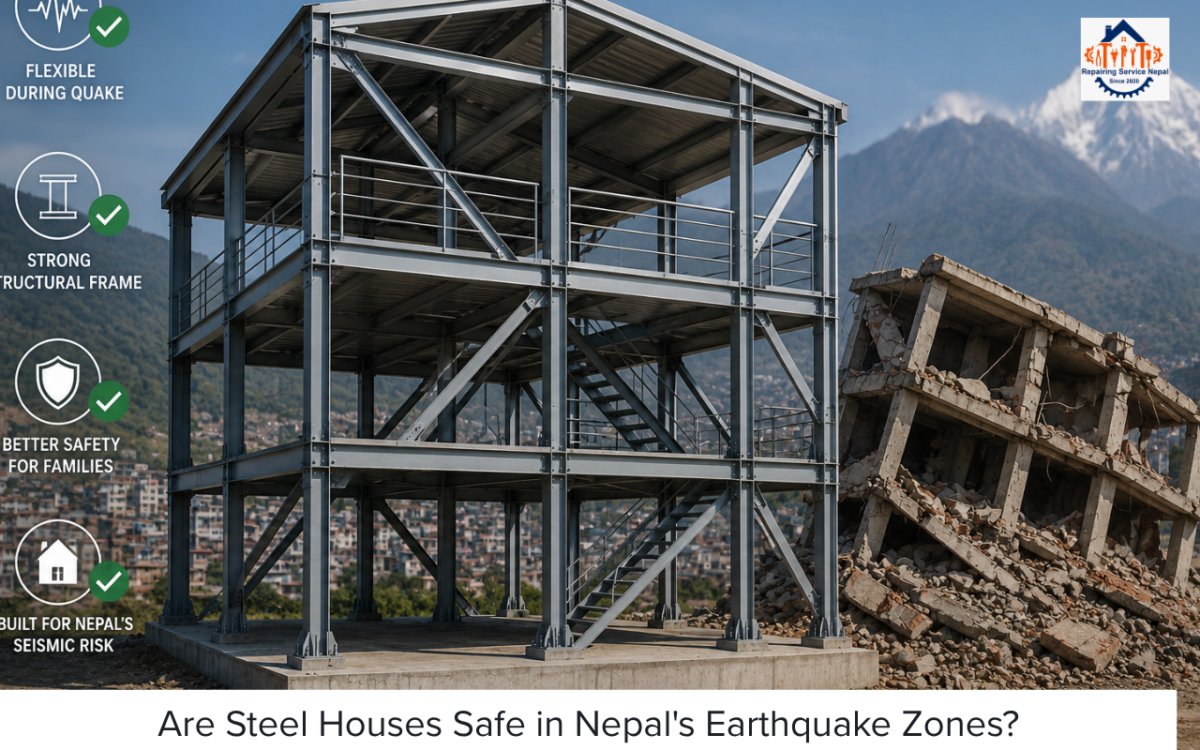
Yes. In fact, a properly designed steel building is one of the safest structural options available in Nepal’s earthquake-prone landscape.
Earthquake Resistance Benefits
Steel’s core advantage is ductility. When seismic energy hits a steel frame, the steel bends and absorbs that energy rather than cracking and collapsing. This is why steel frames are used in high-rise buildings worldwide in earthquake zones. The same principle applies to steel-framed homes in Nepal, whether it is a small home in Bhaktapur or a large commercial building in Kathmandu.
Under Nepal Building Code NBC 105:2020, updated in November 2025, all new construction must meet seismic resistance standards. Steel buildings, when designed by a qualified structural engineer, naturally meet or exceed these requirements.
Fire and Weather Resistance
A common concern about steel is fire. Steel itself does not burn, which is a major advantage over wood-frame construction. However, steel loses structural strength at very high temperatures. This is why professional steel buildings use fire-retardant coatings or intumescent paint on exposed steel members.
For weather, galvanized steel sections handle Nepal’s diverse climate well, from the cold of Mustang to the humid heat of the Terai. Proper anti-corrosion treatment during fabrication is essential and should always be included in your contract.
Lifespan and Long-Term Durability
Steel-framed buildings in Nepal, with proper maintenance and surface treatment, can last 50 years or more. The key maintenance tasks are periodic painting of exposed steel surfaces and checking bolted or welded connections every 10 years or so. This is far less work than the repeated plastering, waterproofing, and crack repairs that RCC houses typically need.
Prefab House vs Heavy Steel Structure Cost Comparison
Many people in Nepal get confused between prefab houses and heavy steel buildings. Both use steel, but they are made differently and used for different purposes. Understanding the difference can help you choose the right option for your budget and project. Initial Construction Cost Difference
| Feature | Prefab / Light-Gauge Steel Panel House | Heavy Steel Structure Building |
|---|---|---|
| Average Cost | NPR 1,800 – 3,500 per sq ft | NPR 2,500 – 5,000 per sq ft |
| Structure Type | Factory-made lightweight panels | Heavy H-beam and I-beam steel frame |
| Construction Speed | Very fast installation | Moderate construction speed |
| Best Use | Small homes, cabins, temporary buildings | Multi-storey homes, offices, and warehouses |
| Design Flexibility | Limited customization | High customization and design freedom |
| Strength | Good for light structures | Stronger for large and tall buildings |
| Earthquake Resistance | Good | Excellent |
| Durability | Durable, but joints need proper sealing | Very durable with proper fabrication |
| Water Leakage Risk | Higher if joints are not sealed properly | Lower with proper flashing and sealing |
| Lifespan | Medium to long-term | Long-term permanent structure |
| Maintenance | Moderate maintenance required | Lower long-term maintenance |
| Best Choice For | Budget-friendly and quick projects | Permanent residential and commercial projects |
Prefab panel houses are durable, but the panels themselves can be more susceptible to water ingress at joints if not properly sealed. A heavy steel frame building, built correctly with proper flashing and sealing, has fewer long-term water-related issues. This is one reason why many homeowners now compare heavy steel framing with prefab housing systems before choosing the right construction method.
Which Is Better for Residential Projects?
For many homes in Nepal, a hybrid construction method works best. This means using a heavy steel frame or RCC frame for the main structure and brick walls with normal interior finishing. It gives better earthquake safety, faster construction, and a more comfortable home design.
At Repairing Service Nepal, we often recommend this hybrid option for homeowners who want the strength and safety of steel without the industrial look of a full prefab panel house.
The construction cost in Nepal in 2026 is affected by labor prices, electrical wiring, plumbing systems, water tanks, and finishing materials. Whether you are building in the Kathmandu Valley, Kathmandu or Lalitpur, expert guidance from a trusted and best construction company in Nepal can help you manage detailed cost planning and improve seismic safety for Nepal’s climate.
Steel Structure Construction Support in Nepal
Final Thoughts on Steel Construction Costs
Steel structure buildings in Nepal in 2026 remain a smart choice for many people. Steel construction continues to grow in Nepal because of its faster construction speed, long-term durability, and earthquake resistance. For both residential and commercial projects, proper planning and professional supervision remain important for managing costs and structural safety.
Steel buildings are strong, faster to build, and safer during earthquakes. They also need less maintenance over time. Whether you want to build a family home, warehouse, or office, understanding construction costs and material pricing helps improve budget planning.
Before starting your project, make sure to do a soil test, prepare a proper Bill of Quantities (BOQ), and work with experienced engineers and contractors who understand Nepal’s building rules and market prices.
Professional engineering guidance and detailed project planning can help improve budgeting accuracy, construction quality, and long-term durability. Contact us today for expert advice, accurate cost estimates, and reliable support for your next steel structure project in Nepal.
Contact Repairing Service Nepal:
Phone: 01-5921330,9802302562
Email: info@repairingservicenepal.com
Address: Raja Janak Marg 32, Kathmandu, Nepal